
Modern businesses collect more data than ever before. Website visits, customer inquiries, sales records, support messages, advertising campaigns, social media activity, email responses, product orders, project updates, and team performance all create useful information. The problem is that most companies do not use this data properly.
Data is often spread across different tools, spreadsheets, inboxes, dashboards, CRMs, websites, and marketing platforms. Business owners and managers may know that the information exists, but they do not always have the time or system to understand what it means.
This is where AI business intelligence becomes valuable.
AI business intelligence combines artificial intelligence, data analytics, reporting dashboards, automation, and business strategy to help companies make better decisions. Instead of guessing what is working, businesses can use AI-powered insights to understand customer behavior, track performance, identify opportunities, and plan smarter growth.
For companies targeting the United States and global markets, data-driven decision-making is becoming a major competitive advantage. Businesses that understand their customers, campaigns, sales pipeline, and operational performance can move faster than competitors that rely only on assumptions.
At HBSS – Hybrid Software Solutions, we help businesses build websites, web applications, custom software, AI solutions, dashboards, and automation systems that support practical business growth. AI business intelligence is one of the most powerful ways to turn technology into measurable value.
What Is AI Business Intelligence?
AI business intelligence is the use of artificial intelligence to collect, organize, analyze, and explain business data. Traditional business intelligence usually focuses on charts, reports, and dashboards. AI adds a smarter layer by helping identify patterns, summarize information, predict trends, and suggest useful actions.
For example, a normal dashboard may show how many leads your website received this month. An AI-powered dashboard can go further and show which source produced the best leads, which service pages attracted serious prospects, which campaigns performed poorly, and which follow-up actions should be prioritized.
AI business intelligence does not only show numbers. It helps explain what those numbers mean.
Why Businesses Need Better Data Systems
Many companies make important decisions without clear data. They may increase ad spending without knowing which campaigns create real leads. They may add new services without understanding customer demand. They may continue using outdated processes because no one has measured where time is being lost.
A better data system gives business owners visibility. It helps answer important questions:
Which services are generating the most inquiries?
Which marketing channels produce the best leads?
Which website pages are converting visitors?
Which customers need follow-up?
Which projects are delayed?
Which team tasks take the most time?
Which products or services are growing fastest?
Where is the business losing opportunities?
Without organized data, these answers are difficult to find. With AI business intelligence, companies can see useful insights more clearly and take action faster.
AI Dashboards for Business Growth
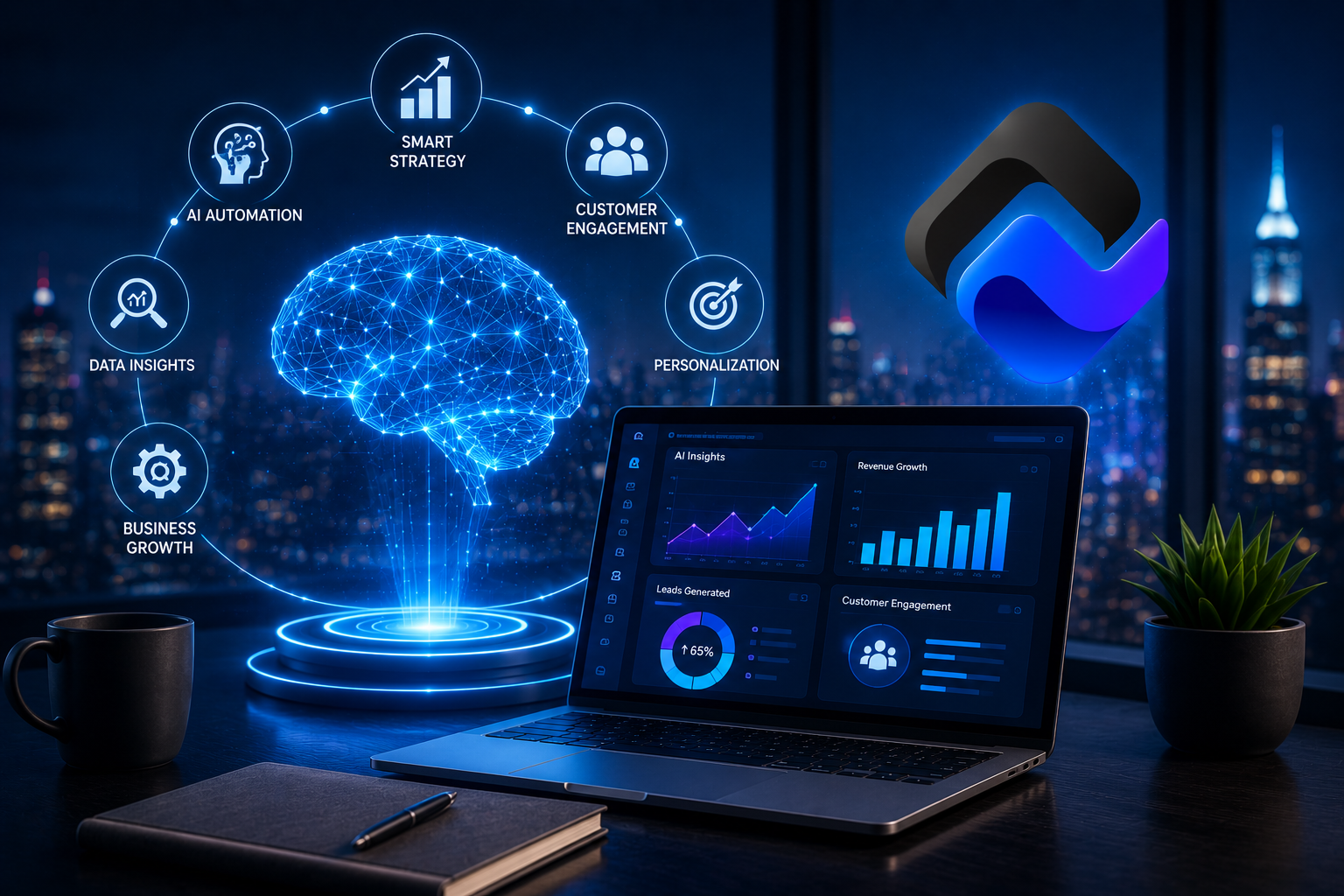
An AI dashboard brings important business information into one visual system. Instead of checking multiple tools, a company can view sales, marketing, operations, customer support, and website performance from a single dashboard.
A dashboard can show lead volume, conversion rates, revenue trends, campaign results, website traffic, support requests, project progress, customer behavior, and team activity.
AI can make dashboards more useful by adding summaries and recommendations. For example, the system may highlight that website traffic increased but inquiries decreased. It may suggest checking the call-to-action buttons, contact form, page speed, or service page content.
For business owners, this type of dashboard saves time. Instead of spending hours reading reports, they can quickly understand what changed and what needs attention.
AI Analytics for Sales Teams
Sales teams need accurate information to close more deals. AI analytics can help them understand which leads are most valuable, which follow-ups are overdue, which services are most requested, and which prospects are more likely to convert.
For example, an AI-powered lead dashboard can categorize inquiries by service type, urgency, company size, location, and source. It can help sales teams prioritize serious leads instead of treating every inquiry the same way.
AI can also summarize customer conversations and prepare follow-up notes. If a prospect asks about website development, SEO, or custom software, the system can record the interest and suggest the next step.
This improves sales efficiency because teams spend less time searching for information and more time communicating with qualified prospects.
AI Business Intelligence for Marketing
Marketing becomes more effective when decisions are based on data. AI business intelligence can help companies understand which campaigns, keywords, blog posts, landing pages, and social media efforts are producing results.
For example, a company may discover that blog traffic is increasing but leads are not improving. This may mean the content is attracting readers but not guiding them toward a service page or contact form. Another company may discover that paid ads are generating clicks but not qualified leads, which may indicate weak targeting or landing page messaging.
AI analytics can help marketers improve content strategy, SEO planning, ad performance, email campaigns, and lead generation funnels.
The goal is not just to get more traffic. The goal is to attract the right audience and convert that attention into business opportunities.
Predictive Analytics for Better Planning
Predictive analytics uses historical data to estimate what may happen next. It can help businesses forecast demand, identify sales trends, predict customer behavior, and prepare for future opportunities.
For example, an e-commerce business may use predictive analytics to understand which products may sell more during a specific season. A service company may use it to identify months when inquiries usually increase. A sales team may use it to estimate which leads are more likely to become customers.
Predictions are not perfect, but they help businesses plan with more confidence. Instead of reacting late, companies can prepare campaigns, staffing, inventory, content, and sales activity ahead of time.
AI Reporting Saves Time
Reporting is necessary, but manual reporting can be slow and repetitive. Teams often spend hours collecting data from different platforms, copying numbers into spreadsheets, and preparing summaries for management.
AI reporting can automate much of this process. It can collect data, create summaries, highlight changes, and deliver reports weekly or monthly.
For example, a business owner can receive a monthly report that explains website performance, lead sources, customer inquiries, top services, campaign results, and recommended improvements.
This makes reporting more useful because it becomes less about collecting numbers and more about understanding what actions should be taken.
AI Business Intelligence for Customer Experience
Customer experience is one of the most important areas where data can help. Businesses can use AI to analyze support messages, reviews, chatbot conversations, service requests, and customer feedback.
This can reveal common problems, repeated questions, customer concerns, and improvement opportunities.
For example, if many customers ask the same question before purchasing, the business may need clearer website content. If support messages often mention delays, the company may need better communication or process automation. If users leave a checkout page, the e-commerce experience may need improvement.
AI business intelligence helps businesses understand customers at scale. Instead of relying only on a few comments, companies can analyze larger patterns and improve the experience more effectively.
Custom AI Dashboards vs Ready-Made Tools
Many businesses start with ready-made analytics tools, and that can be useful. However, ready-made tools may not always match your exact workflow. A company may need custom dashboards that connect website inquiries, CRM records, sales data, project updates, support tickets, and marketing performance.
A custom AI dashboard can be designed around the business process. It can show only the information that matters and support the decisions your team actually needs to make.
For example, a service business may need a dashboard for leads, quotes, follow-ups, project status, and revenue. A healthcare business may need secure reporting and appointment insights. A real estate company may need property inquiries, agent activity, and buyer behavior. An e-commerce business may need product performance, customer segments, cart behavior, and campaign results.
Custom software gives businesses more control over how data is collected, displayed, and used.
How to Start With AI Business Intelligence
The best way to start is to identify the decisions you want to improve. Do not begin with tools. Begin with questions.
Ask:
What information do we check every week?
Which reports take too long to prepare?
Where are we making guesses?
Which customer actions are hard to understand?
Which sales or marketing decisions need better data?
Which team workflows need more visibility?
Once the questions are clear, decide what data is needed. Then build dashboards, reports, and AI summaries around those needs.
Start with one area, such as sales leads, website performance, marketing campaigns, or project reporting. After that system is working, expand step by step.
Build AI Business Intelligence Solutions With HBSS
HBSS – Hybrid Software Solutions helps businesses build practical digital systems for growth. We create AI solutions, web applications, custom software, business dashboards, reporting systems, automation workflows, websites, SEO structures, and digital marketing systems.
Whether your company needs a sales dashboard, AI reporting system, customer analytics platform, marketing performance dashboard, or custom business intelligence solution, HBSS can help you plan and build a system that fits your workflow.
AI business intelligence is not about collecting more data for no reason. It is about turning the right data into better decisions.
Final Thoughts
AI business intelligence helps companies move from guessing to understanding. It gives business owners and teams clearer visibility into sales, marketing, operations, customers, and growth opportunities.
With AI dashboards, predictive analytics, automated reporting, and custom data systems, businesses can save time, improve performance, and make smarter decisions.
If your business has data but does not know how to use it effectively, AI business intelligence can help turn that information into growth.